
On this page
The shawm
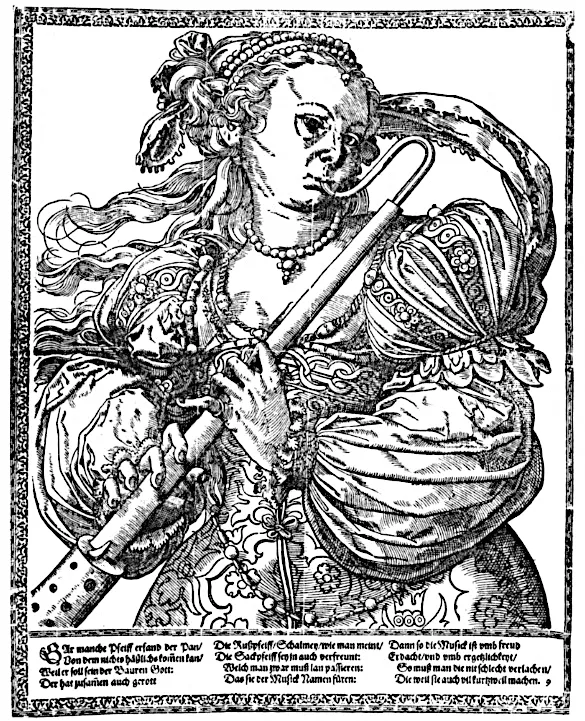
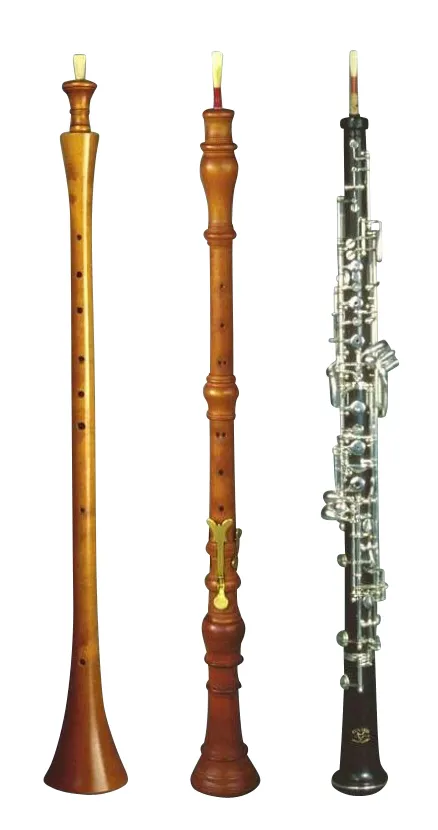
The oboe’s ancestor is the shawm, a medieval and Renaissance double reed built to be loud. Its reed was broad and was often blown with the lips off the cane, sometimes against a wooden pirouette that supported the mouth, producing a piercing tone suited to processions and dance bands played out of doors. Control was secondary to volume.
The birth of the hautboy
In mid-seventeenth-century France, makers — the Hotteterre family chief among them — remade the shawm for the indoor world of the court. They built it in joints, narrowed the bore, and crucially put the reed directly between the lips, giving the player fine control of tone and dynamics. The result, the hautboy, was soft, vocal and expressive — a true chamber instrument, and the direct parent of the oboe.
Keys and the classical oboe
For a century the hautboy had only two or three keys; players covered the rest with their fingers and their lips. As music grew more chromatic, makers added keys through the late eighteenth and early nineteenth centuries, improving tuning and reach. The reed narrowed and firmed up to match, trading some of the baroque sweetness for pitch stability.
Adding keys changed what the reed had to do. A player who could no longer “lip” every note into tune needed a reed that held its own pitch — a quiet but decisive push toward the harder modern scrape.
The Conservatoire system
In nineteenth-century Paris, the Triébert workshop and the Paris Conservatoire developed the keywork that became the standard Conservatoire-system oboe — the basis of nearly every professional instrument today. With the mechanism settled, the reed became the main remaining variable, and national schools of reed-making grew up around the now-standard instrument.
Table 1 — The lineage at a glance
| Instrument | Era | Reed character |
|---|---|---|
| Shawm | Medieval–Renaissance | Broad, loud, lips often off the cane |
| Hautboy | Baroque | Broad but soft; reed between the lips |
| Classical oboe | Late 18th c. | Narrower, firmer, steadier pitch |
| Conservatoire oboe | 19th c.–today | Narrow modern scrape; national schools |
Why the lineage matters
Every choice a maker faces — shape width, scrape length, how dense the cane — is an echo of this history. The reed on the bench today is the latest answer to a question the shawm first asked: how do you turn a piece of cane into a voice that fits the music of its moment?