
On this page
What the knife does
Scraping is controlled removal of fibre, micrometres at a time, and the knife is what does it. A good reed knife lets you shave the cane flat and clean so the surface stays smooth; a poor or dull one digs, skips and tears, leaving a ragged scrape that never settles. Choosing and maintaining the knife is therefore a craft in itself.
Hollow-ground versus double-bevel
Two geometries dominate. A hollow-ground (single-bevel) blade is flat on one face and ground on the other; it acts almost like a chisel, taking very fine, controlled shavings, and is the traditional choice for finishing scrapes. A double-bevel blade is ground on both faces and is more forgiving and faster for bulk removal, but less precise at the tip. Many makers keep one of each.
Bevel angle
The angle of the bevel trades keenness against durability. A shallow bevel is keener and shaves more cleanly but dulls quickly and chips on hard cane; a steeper bevel lasts longer but bites less finely. The usable range is narrow, and most makers settle on one angle and learn it intimately rather than chasing the geometry from reed to reed.
A right-handed maker grinds the bevel for a right-handed stroke, and vice versa. A knife set up for the wrong hand fights you at the tip — worth checking before blaming your technique.
Sharpening
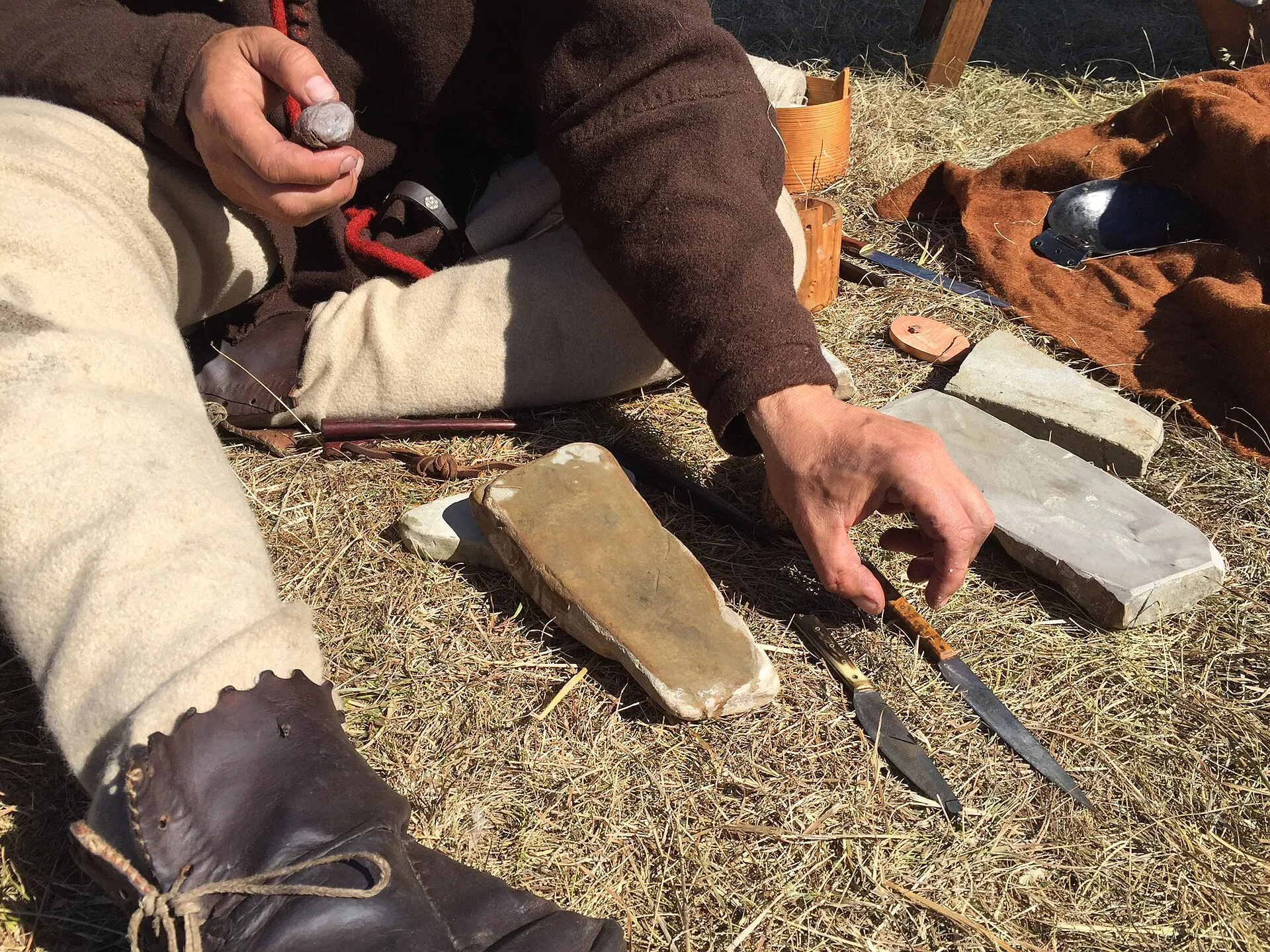
A reed knife is sharpened far more often than a kitchen knife — sometimes every few reeds. The sequence is the familiar one: a stone to set the edge, then a fine stone or strop to polish it, raising and then removing the wire edge (the burr) so the final edge is clean. The single most common cause of bad scraping is simply a knife that was sharpened too long ago.
Table 1 — A typical sharpening progression
| Stage | Surface | Purpose |
|---|---|---|
| Set | Medium stone | Re-establish the edge, raise a burr |
| Refine | Fine stone | Polish the bevel, reduce the burr |
| Finish | Strop / steel | Remove the wire edge, align the edge |
Caring for the edge
Keep the blade dry, oil it if it is carbon steel, and never test sharpness against anything harder than cane or your thumbnail. Stored well and stropped often, a good reed knife outlasts the maker — many are handed down. The knife rewards exactly the patience that reed-making as a whole demands.