
On this page
Two tools, set before the knife
The gouger and the shaper sit upstream of all scraping. They are precision machines, and their settings travel through every reed a maker makes — which is why makers treat a gouger’s bed and a shaper’s outline almost like a signature. Change one of them and every reed in the batch changes with it.
The gouger
A gouger clamps a split, pre-gouged piece of cane and draws a curved blade along it, hollowing the inside to a measured wall thickness. The two figures that matter are the centre gouge and the side gouge: a thicker centre gives a darker, more resistant reed, while thinner sides free the blade. A gouger that is out of adjustment produces cane that is uneven side to side — a fault no amount of scraping fully cures.
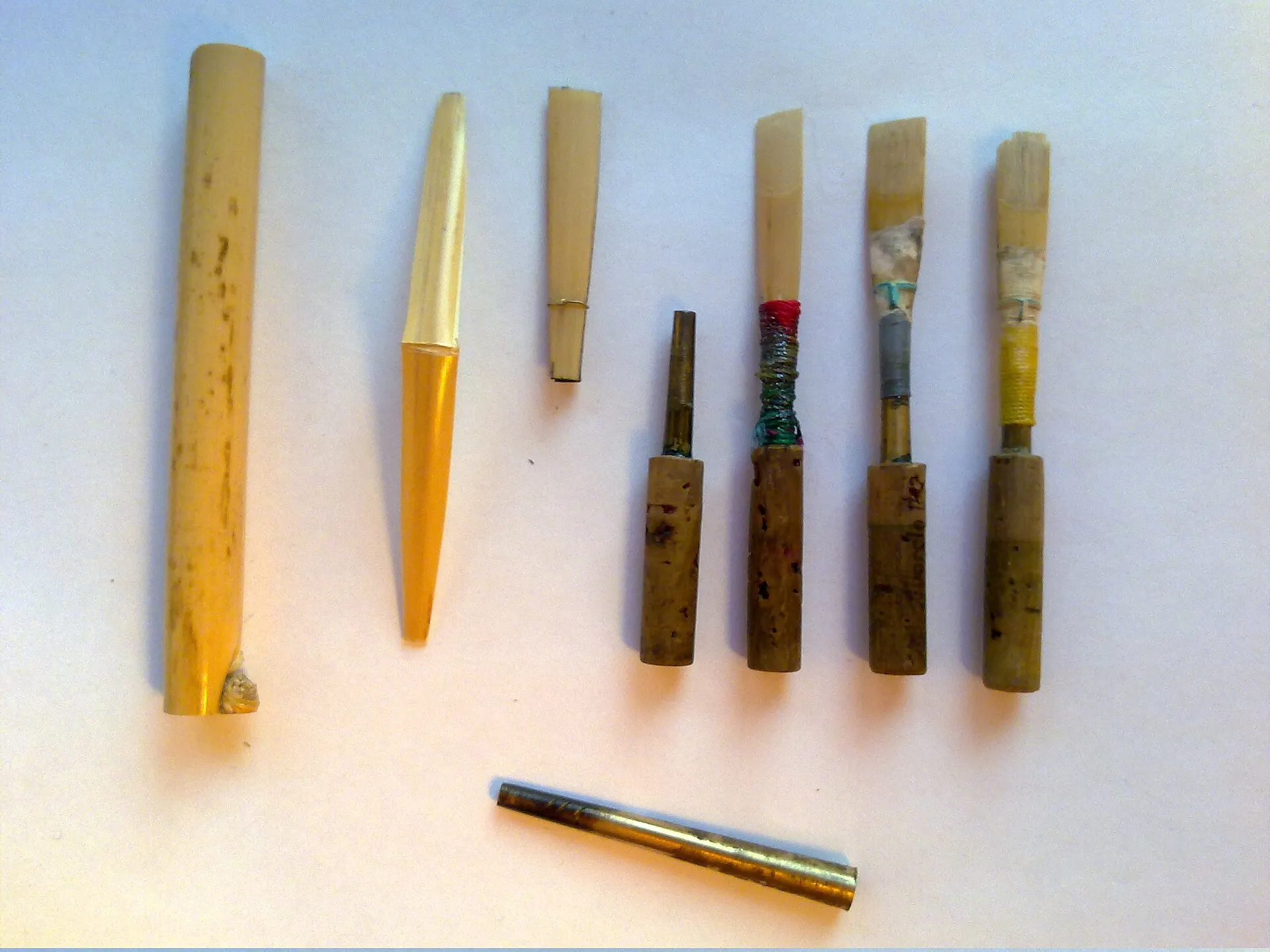
The gouge bed and blade
The bed holds the cane to a fixed radius while the blade removes the inside. Bed and blade must match: a bed radius that disagrees with the cane’s diameter leaves the gouge thick at the edges or thin at the centre. Keeping the blade keen and the bed clean is routine maintenance that pays back directly in consistent cane.
The shaper tip
After gouging, the cane is folded and a shaper tip — a metal template — guides a knife or machine that cuts the blade’s outline. The tip’s width is the key variable: wider tips give a darker, more flexible reed, narrower tips give edge and stability. Makers own several tips and choose among them the way a photographer chooses a lens.
Tip width and gouge interact. A wide shape on thin-gouged cane behaves nothing like the same shape on a thicker gouge — which is why makers change one machine setting at a time and log the result.
Matching the tools to the cane
No setting is right in isolation. Gouge, shape and cane density form a system: dense cane wants a slightly thinner gouge or a narrower shape to stay free; soft cane wants the opposite to keep its spine. The art of equipment is not owning the most tools but matching the few you own to the cane in front of you — and writing down what worked.